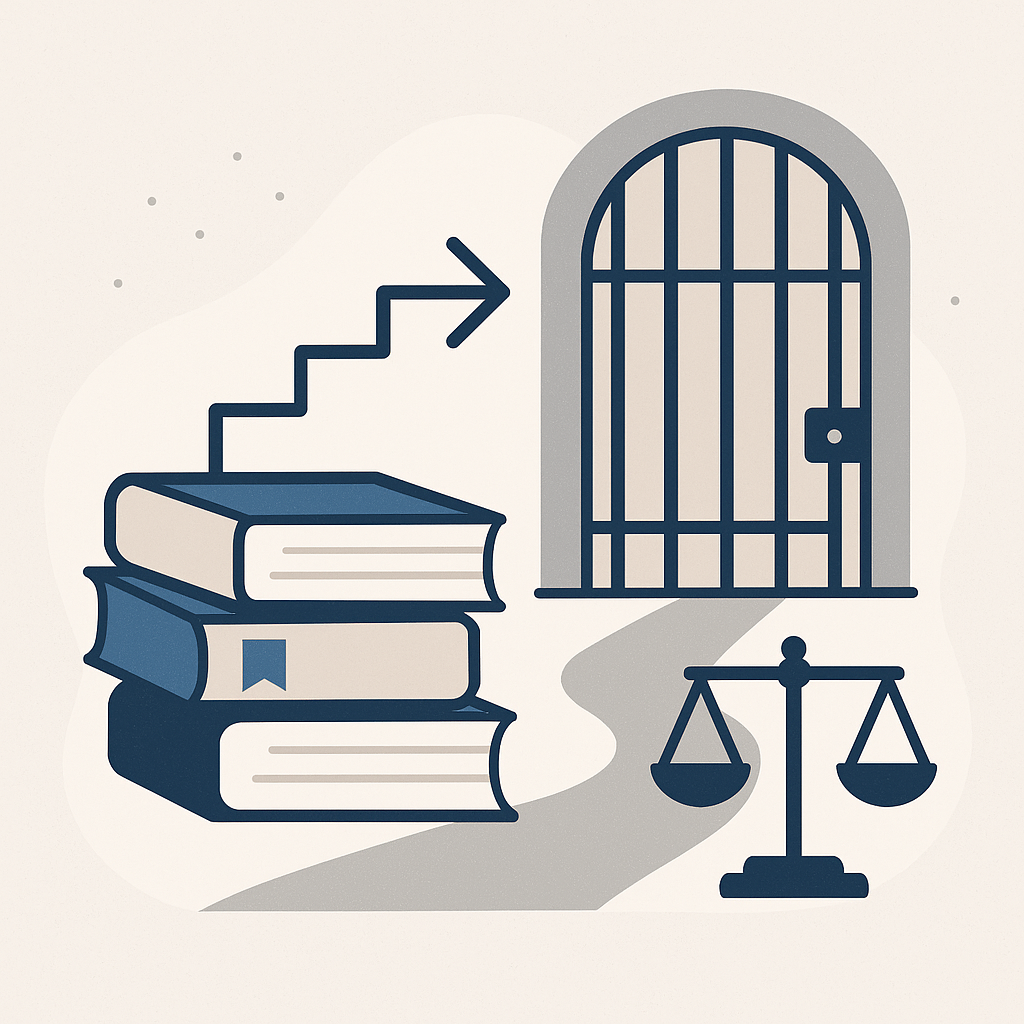
Many people believe that once a sentence has been served or a person leaves prison, their criminal record automatically disappears. However, the legal reality is far more complex.
In one of Estradé Law Firm’s videos, María Llamas explains what really happens to criminal records, when they can be cleared and what legal requirements must be met in order to officially close that chapter.
Because leaving prison does not automatically mean starting from zero in the eyes of the justice system.
Criminal records do not disappear automatically
One of the most common misconceptions is believing that the simple passage of time automatically erases a criminal record.
In Spain, criminal records are not cancelled automatically after serving a sentence. In order for them to disappear legally, it is necessary to request their cancellation before the Ministry of Justice or wait for the administration to process it ex officio.
In addition, certain legal requirements must be fulfilled.
What requirements must be met
In order to cancel a criminal record, it is necessary to:
– Fully complete the imposed sentence.
– Avoid committing further offences during the legally established period.
– Wait the amount of time required by law according to the seriousness of the offence.
The more serious the offence, the longer the waiting period before cancellation can be requested.
For this reason, every situation must be analysed individually.
How long must someone wait?
The cancellation periods depend directly on the type of sentence and the seriousness of the offence.
For less serious crimes, the waiting period is shorter. In contrast, when dealing with more serious offences or heavier sentences, the required period before cancellation increases significantly.
During that time, the criminal record continues to legally exist.
How the cancellation process works
The cancellation may occur at the request of the individual concerned or, in certain cases, automatically through the administration.
Once approved, the criminal record no longer appears as active and is transferred to a special section of the Central Registry of Convicted Persons.
Access to that information is restricted and may only be consulted by judges or courts in legally established situations.
The law allows people to close a chapter
As María Llamas explains, leaving prison does not automatically erase the past, but the law does provide mechanisms that allow individuals to rebuild their lives legally.
The cancellation of criminal records is part of that process and aims to support reintegration after criminal responsibility has been fulfilled.
Because criminal law is not only about punishment: it also creates pathways for people to move forward and rebuild their lives after a conviction.